





02 Nov Water Seepage vs Water Leakage: 4 Tests That Settle It
Whether you have water seepage or water leakage comes down to where the water starts. How much of it you can see tells you very little. Seepage moves through the building material, while leakage escapes from a pipe or another contained system. PUB publishes a free meter test that answers half the question within an hour. Run the four tests below and find the source before you commit to any leak detection and waterproofing scope.
What is the difference between water seepage and water leakage?
Leakage is water escaping from a contained system: a supply pipe, a drain, a tank or a fitting. Seepage is water moving through the building fabric itself, pushed along by capillary action, hydrostatic pressure or an adjacent wet area.
The difference matters because the two repairs have nothing in common. A plumber fixes leakage by finding and replacing a section of pipe. A waterproofing contractor fixes seepage by treating a surface, a crack or a junction. Call the wrong trade and you pay for the visit, and often for opening up the wrong wall as well.
Two properties tell them apart. Leakage ignores the weather, because a pressurised pipe leaks the same in a downpour as in a dry spell. Seepage depends on a water source that comes and goes, such as rain on an external wall, a shower running on the other side, or groundwater pressing against a basement.
| Seepage | Leakage | |
| Source | Building fabric | Contained system |
| Driver | Capillary, hydrostatic, adjacent wet area | Supply pressure or gravity drainage |
| Weather correlation | Usually present | Absent |
| Supply isolation | No effect | Stops or slows |
| Trade | Waterproofing contractor | Plumber |
Why does the volume of water not tell you which one you have?
Most people judge by flow rate, and flow rate misleads them more often than any other clue. A damp patch can turn out to be a leak, and running water can turn out to be seepage.
A pinhole in a concealed copper supply line lets out a tiny volume under pressure. Behind plaster, that water spreads through the wall build-up and shows up as a damp patch that grows slowly, sometimes for months, without a single drip. It looks like seepage, and a plumber has to fix it.
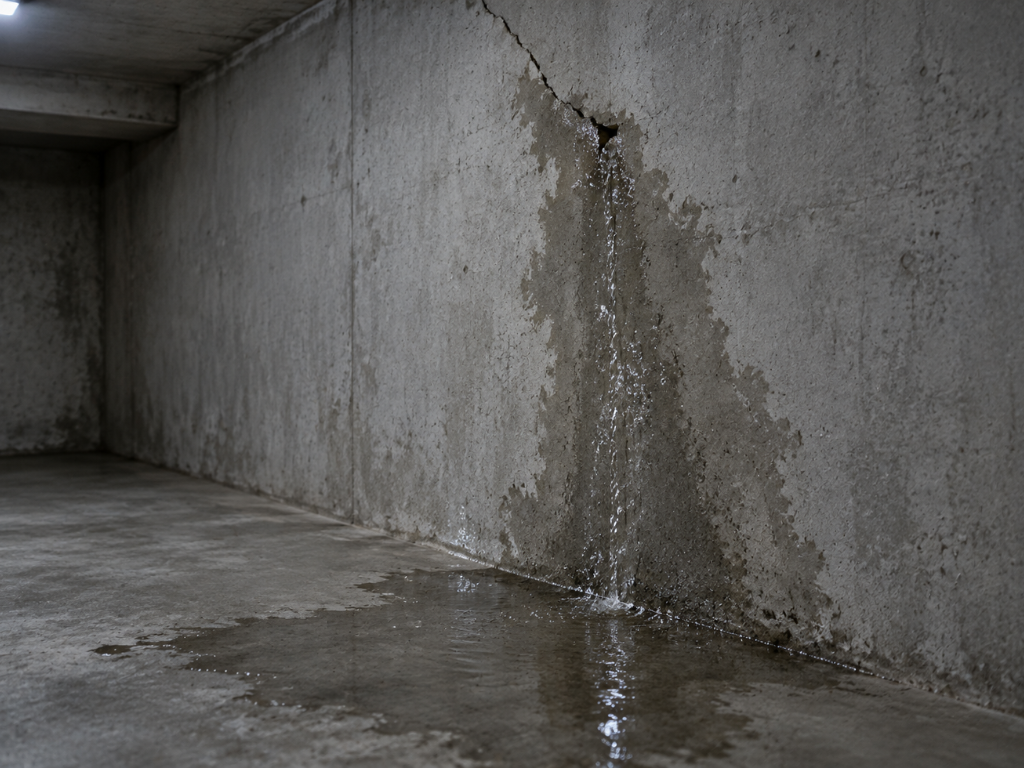
Hydrostatic seepage works the other way round. Water standing against a basement or retaining wall pushes through the material under real pressure, and where it finds a crack, you get running water. You’d swear a pipe had burst. A plumber will find nothing, because the fault sits in the waterproofing.
Both misreadings send owners into expensive work on the wrong part of the building. The damp patch gets a waterproofing quote while the pipe behind it keeps leaking. The basement gets a plumber who leaves without an answer.
Flow rate describes the symptom. To find the source, check whether the water responds to supply pressure and whether it responds to the weather.
How does the water meter test settle it?
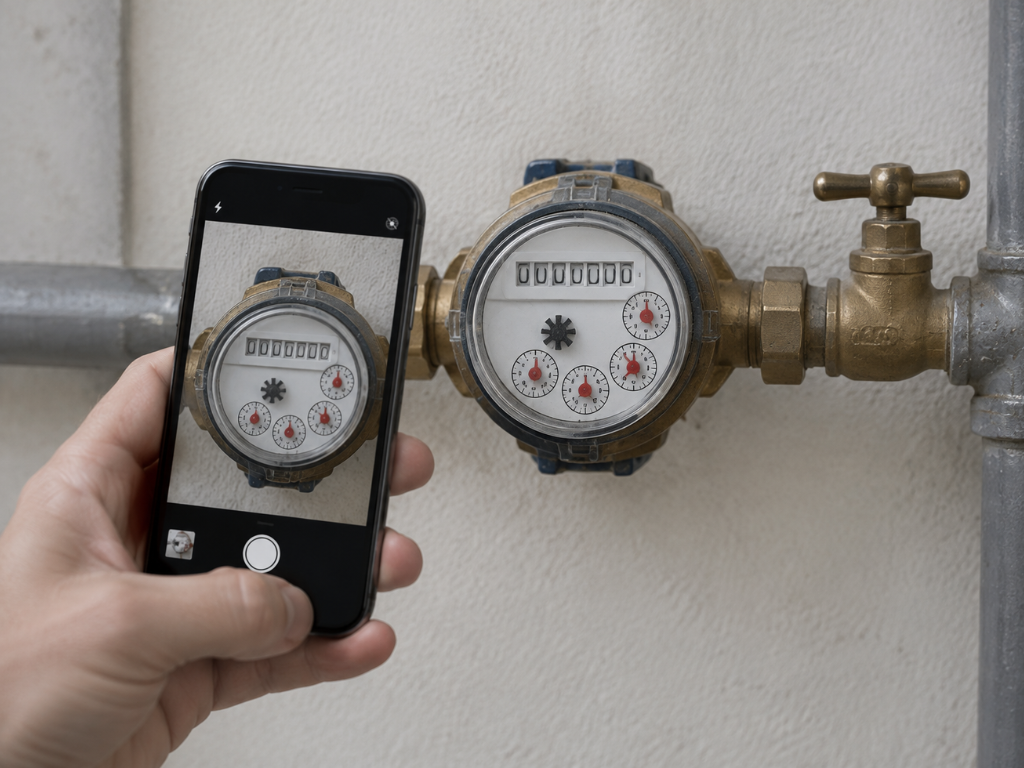
Turn off every tap and water-using appliance, read the meter, wait, then read it again. If the meter moves, water is escaping the supply system and you have leakage. PUB puts it plainly: when all taps are off and the meter dial keeps turning, you have a leak.
Take care over how you run it. Your meter sits near the main stopcock. Photograph the dials instead of writing the numbers down, because a photo records the fine dial position that the digits leave out. PUB’s meter reading guide shows you where to find the meter and how to read it. Leave everything off for at least an hour, overnight if you can, then photograph the dials again.
Three things can spoil the result, and you can avoid all of them. A toilet cistern refilling quietly counts as usage, so isolate the cistern too. Ice makers and water filters draw water on and off. On a landed property, a garden tap or a shared riser may sit outside the meter you’re reading.
A moving meter rules out seepage as the main cause and points to a failure on the supply side, so book concealed pipe leak detection before you make any waterproofing decision. A still meter doesn’t prove seepage. Drainage and waste pipes sit downstream of the meter and won’t register on it. You’ve still narrowed the field a lot, and the broader sequence for finding a leak at home picks up from there.
What does rain correlation tell you?
When a damp area gets worse within hours of heavy rain and dries back over the next few days, water is seeping through the external fabric. When it holds steady through two dry weeks, rain isn’t the cause.
Keep a log instead of relying on memory. Mark the edge of the damp area with tape, take a dated photo, and repeat after the next two rain events and once during a dry spell. Three dated records separate weather-driven seepage from a constant source better than any single inspection can.
The wall’s orientation sharpens the picture. Seepage on a west or southwest elevation that worsens between April and November follows the Sumatra squall season. On a northeast elevation, seepage that worsens between December and March follows the Northeast Monsoon. If a damp patch ignores both calendars on every elevation, rain isn’t driving it.
Damp at or below ground level behaves differently. It tracks the water table, so it responds to long wet periods and shrugs off single storms. That delay is a clue in its own right, since seepage reaching foundations runs on a slower cycle than anything happening above ground.
Why does thermal imaging read seepage cold and a pipe leak warm?
Evaporation pulls heat out of a surface. As moisture evaporates from damp building fabric, the material cools, so it shows up colder than the dry wall around it. A leaking hot water line shows up warmer. Whether the anomaly reads warm or cold is the most useful thing the camera tells you, and operators ignore it all the time.
You’ll see three patterns worth separating. A cool patch spreading with no clear edge means moisture in the fabric. A warm line running straight at a steady height means a hot water pipe. A cool straight line means a cold water pipe, and you tell it apart from seepage by its shape, since both read cool.
Infrared has limits. Christopher N. Grey and Emily C. Wartman of Simpson Gumpertz & Heger, writing on infrared technology in building envelopes, point out that ASTM C1153 doesn’t cover finding the cause of moisture or its point of entry. They also warn that easy-to-read imagery invites “misuse and misinterpretation if the IR scan is not performed correctly”.
So treat a thermal scan as a map. It shows you where to open up, and it can’t show you what sits behind the surface. If an operator hands you a coloured image and calls it a diagnosis, they’ve skipped the step that counts.
What does a moisture meter reading actually confirm?
It confirms how far the water has spread. It can’t tell you the source. A moisture meter compares wet against dry within one material, so it marks out the affected area and says nothing about how the water got there.
You can’t compare readings across materials. Plaster, screed, concrete and timber each give a different baseline response, so 18% on plaster and 18% on concrete describe two different conditions. Take a reference reading on a dry patch of the same material first, then work outward from the wettest point.
Look at the gradient. If moisture drops evenly in every direction from a central point, you’re dealing with a point source, and that usually means a pipe. If readings fall as you move up from a floor junction, water is reaching that junction from somewhere else. High readings across a whole wall face mean water is passing through the material in bulk.
Pinless meters read about 20 mm to 30 mm below the surface without leaving marks, which suits finished walls. Pin meters have to pierce the surface and read at pin depth. Neither type reaches the far side of a 100 mm wall, so a dry reading on your side doesn’t mean the whole wall is dry.
How do you test a wet area for membrane failure?
Run a water retention test: flood the area, hold the water, and watch the ceiling below. No other test recreates what a wet area membrane faces in daily use.
Plug the floor trap, fill the area 25 mm to 50 mm deep against the upstands, and hold it for 24 hours. Have someone check the ceiling below at the start, at four hours and at the end. If damp appears below during that window, the membrane has failed. A dry ceiling doesn’t give the membrane a full pass, because standing water doesn’t press on a wall junction the way a running shower does.
Only run this test after the meter test comes back still. If a concealed supply pipe is leaking, flooding the bathroom gives you a positive result that proves nothing, because water was reaching the ceiling below anyway.
The order of the tests counts for more than the equipment. Start with the meter, because it’s free and settles the supply side. Keep the rain log second, since it costs you nothing but time. Use thermal and moisture mapping third to mark out the area. Save the water retention test for last, to confirm the mechanism before anyone opens up a floor or wall.
Does the legal difference match the technical one?
No, and owners lose disputes by assuming it does. In a strata development, the Building (Strata Management) Act applies. Parliament renamed it from the Building Maintenance and Strata Management Act with effect from 1 October 2025.
The Act frames inter-floor leakage around evidence of dampness, moisture or water penetration on a ceiling. That wording covers a slow damp patch and an active drip alike. The presumption that follows doesn’t wait for a minimum volume, and it doesn’t ask whether the water came through a pipe or through a slab.
So “it’s only seepage, not a leak” won’t hold up as a defence. That line describes the mechanism, while the statutory test looks for evidence of water where water shouldn’t be. BCA’s Strata Management Guides include a dedicated guide on water seepage next to the dispute resolution material for this reason.
The technical difference does decide cost and trade. Whether the water came from a pipe inside one unit or from a failed membrane decides who hires whom and what gets fixed. You face the same question when you work out what causes ceiling leaks before anyone scopes a repair.
Can you have seepage and a leak at the same time?
Yes, and often enough that assuming a single cause is the surest way to pay for the same repair twice. Bathrooms are where you’ll usually find both, because the wet area and the concealed pipes share the same walls.
The tests pull them apart because each source reacts differently. Shut off the supply for 24 hours. A patch that stops growing was fed by a pressurised pipe, and a patch that keeps growing wasn’t. If one area responds and another doesn’t, you have two sources.
Watch for a partial result. When a repair reduces the damp but doesn’t clear it, you likely have two sources with only one fixed, and owners often read that as one problem repaired badly. Re-run the meter test after the first repair before anyone re-opens the same wall.
An older bathroom with a failed membrane and ageing concealed pipes will show both, and the order of repairs matters. Fix the plumbing first. Waterproofing laid over a wet substrate fails however well the applicator puts it down, which is why the full leak repair service scope covers both trades.
Run the free tests before you call a contractor
Where the water starts decides the repair. A pinhole behind plaster makes a damp patch and a basement wall under pressure makes running water, so flow rate will keep pointing you the wrong way. The meter test and the rain log cost nothing and settle most cases before anyone gives you a quote. Run them in the wrong order and you could pay to hack up a bathroom while a plumbing fault keeps leaking.
Send a dated photo, your meter test result and your property type through the contact form, or call 8688 8600. Proseal sends back a written diagnosis naming the source before proposing any repair.
FAQs About Water Seepage vs Water Leakage
What is capillary seepage and how do I identify it?
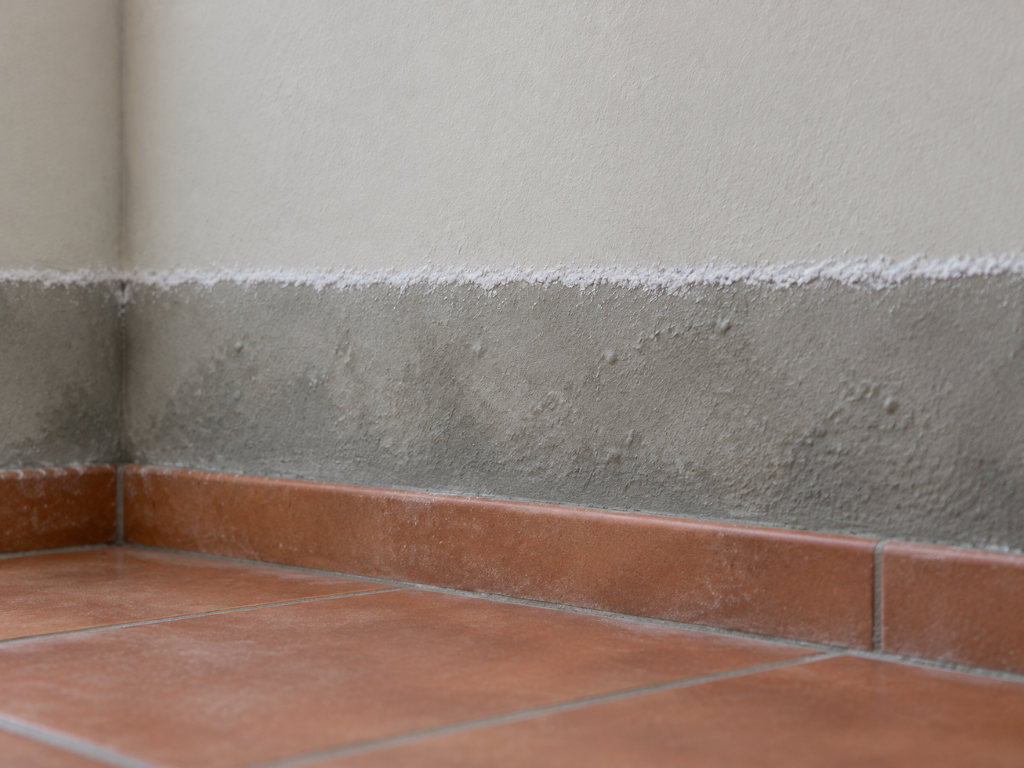
Capillary seepage is water drawn up through porous material from a wet source. It needs moisture at the base and an unbroken absorbent path above. You’ll see damp in the lowest 0.5 to 1 metre of the wall with a clear upper tide-mark, usually lined with white efflorescence deposits.
Who pays if it turns out to be seepage rather than a leak?
The seepage-or-leak label doesn’t decide it. The Building (Strata Management) Act, renamed in October 2025, frames inter-floor leakage around evidence of dampness or water penetration, which covers both. Cost depends on where the water started and whether that element is common property or part of a lot.
How long before a damp patch becomes an active drip?
No fixed timeline exists, and waiting to find out costs you more. A pinhole leak behind plaster can stay a damp patch for months while it soaks the wall build-up. A failed wet area membrane can go from stain to drip within one wet season once the substrate is saturated.
Can a plumber tell me whether it is seepage or leakage?
A plumber can confirm or rule out the supply side, which gives you half the answer. Ruling out plumbing won’t tell you which seepage mechanism you have. For that, you need a waterproofing specialist registered under BCA workhead CR13. Run PUB’s meter test before either visit to narrow things down for free.
Does a high water bill prove I have a leak rather than seepage?
It proves water is passing the meter that you can’t account for, which points to the supply side. Seepage could still be happening at the same time. Drainage and waste pipe leaks sit downstream of the meter and don’t raise the bill, so a normal bill doesn’t clear the plumbing either.

Sorry, the comment form is closed at this time.