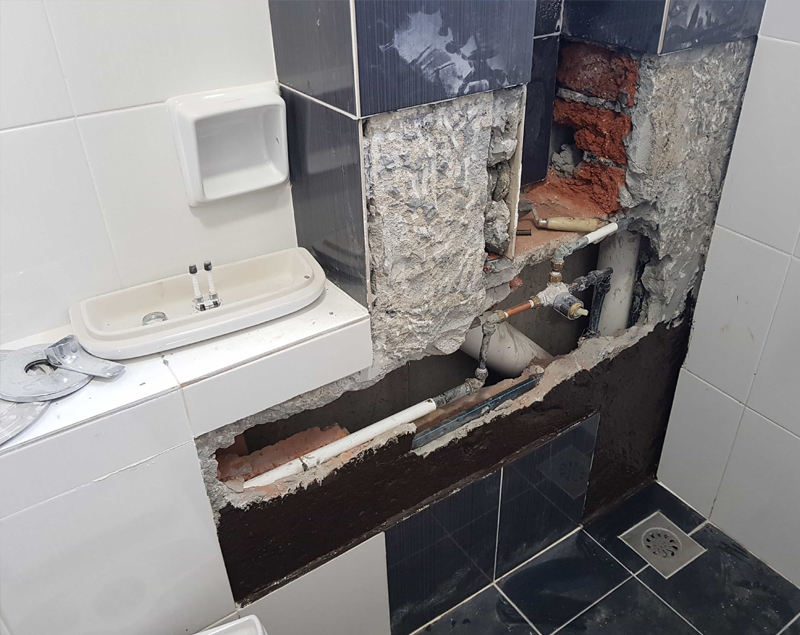

Concealed Pipe Leakage

Concealed Pipe Leakage


The walls of our homes & offices

conceal a network of pipes needed to deliver water to our various appliances. This makes detection of leaks from such pipes a less straightforward task as compared to leakages where we are able spot outright with our naked eye. Should you find damp and discoloured walls or floorboards, a concealed leak may be at work.

Alternatively, you can check for a leak simply by recording your water meter, not using water for an hour, before reading the meter again. If the reading has changed, you may have a leak. If so, you can trust our experts here at ProSeal to determine the source of the leak and to fix it in a quick and effective manner.

Our Promise

Most Competitive Rates

Only Quality Workmanship

After Sales Warranty

FAQs

What is concealed pipe leakage?

Concealed pipe leakage is water escaping from supply pipes hidden inside walls, floors, or false ceilings, where the leak is not visible at the surface. In Singapore homes, the pipes most commonly affected are copper or stainless steel cold water lines, hot water lines, and PVC discharge pipes for sinks and toilets. Detection requires specialist tools because the pipe is not accessible.

How do you detect a concealed pipe leak without hacking?

Concealed pipe leaks can be detected without hacking using five non-invasive methods: water meter shutoff testing (no water use for 1 to 2 hours, then check meter movement), acoustic leak detectors that pick up flow sounds, thermal imaging cameras for hot water lines, moisture mapping with handheld meters, and tracer gas injection through the pipe system.

What are the signs of a hidden pipe leak in walls?

Five signs indicate a hidden pipe leak in walls: damp or discoloured patches that stay wet regardless of weather, peeling paint or bubbling plaster, mineral deposits or chalky white efflorescence, a sudden jump in your water meter reading or PUB bill, and unexplained drops in water pressure. A constant drip sometimes produces a faint trickling sound behind the wall.

How is concealed pipe leakage repaired?

Concealed pipe leakage is repaired in three main ways: traditional hacking to expose and replace the damaged pipe section, epoxy pipe lining where a coating is applied through the inside of the existing pipe (non-hacking), or surface re-routing where a new pipe is run outside the wall. Choice depends on pipe access, leak severity, and whether wall finishes can be saved.

Will fixing a concealed pipe leak require breaking the wall?

Not always. Minor leaks at accessible joints can often be repaired with epoxy pipe lining or surface re-routing without breaking the wall. Hacking is required for burst pipes deep in the slab, severely corroded copper sections, or any leak where the affected pipe length exceeds 1 to 2 metres. A PUB-licensed plumber assesses access before deciding the method.

How long does concealed pipe leak repair take?

Concealed pipe leak repair takes 1 to 5 days depending on access. Detection takes 1 to 4 hours with acoustic and thermal tools. Epoxy pipe lining repair runs 1 to 2 days plus 24-hour curing. Hacking, replacement, re-plastering, and re-tiling takes 3 to 5 working days. PUB-licensed plumbers handle pipe replacement; waterproofing contractors restore wall finishes.

Our Works

Enquiry Form

ENQUIRE NOW
close slider

Enquiry Form