
SWIMMING POOL/ PLANTER BOX/ OTHER AREAS WATERPROOFING

Waterproofing systems for outdoor amenities such as swimming pools and planter boxes. These amenities are highly popular due to their aesthetic and health benefits, but they increase the probability of water seepage which may damage the structural components of the surrounding areas. To prevent water penetration, a waterproof membrane needs to be installed both below and above the relevant contents fill level.
Instead of sweating over the risks of water leakage from such outdoor amenities, why not let our experts at ProSeal mitigate the risk while you get to enjoy lounging by the pool or relaxing amongst urban greenery.

Yes. Swimming pools need a continuous waterproofing membrane installed before tiling because reinforced concrete pool shells are not water-tight on their own. Constant chlorinated water exposure attacks both concrete and rebar over time. Most pools in Singapore use a flexible cementitious waterproofing layer covered by mosaic or ceramic tiles. Without it, leaks reach the surrounding deck or unit below.
An unwaterproofed planter box leaks water and roots into the surrounding building structure within months. Water saturates the slab beneath, causing rebar corrosion, concrete spalling, and ceiling damage in the unit below. Plant roots also penetrate the screed and reach concrete cracks, accelerating deterioration. In condos and shophouses, this often shows up as damp patches on the floor underneath.
For planter boxes in Singapore, a two-layer system works best: a flexible cementitious or polyurethane (PU) waterproofing membrane applied to the inside of the planter walls and base, followed by a separate root barrier layer to stop plant roots from puncturing the membrane. A drainage layer is added above the root barrier before soil fill goes in.
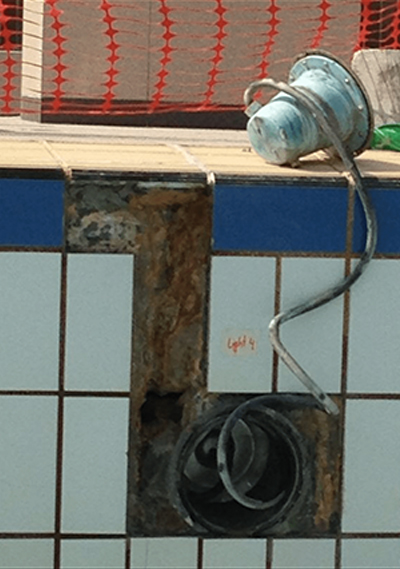
Swimming pools in Singapore leak mainly at five points: hairline cracks in the concrete shell from ground settlement or thermal stress, failed silicone at tile grout lines, deteriorated sealant around skimmer boxes and overflow grilles, gaps at light fittings and inlet jets, and membrane breakdown after 8 to 12 years. Chlorine and UV both shorten waterproofing lifespan.
Swimming pool waterproofing should be inspected at least once a year by a qualified contractor, with a full pressure test every 2 to 3 years. Annual checks cover tile grouting, skimmer box seals, light fitting gaskets, and any unexplained drop in water level. A more thorough drain-down inspection of the cementitious membrane is recommended every 5 to 7 years.
Planter box waterproofing must include a root barrier layer to stop plant roots from puncturing the membrane, since roots actively seek cracks in cementitious surfaces. Pond waterproofing skips the root barrier but adds a non-toxic, fish-safe top coating because chemicals leaching from standard membranes can kill aquatic life. Both use a flexible cementitious or PU base layer over the concrete shell.