




30 Oct Water Seepage Repair Cost Singapore: 2026 Breakdown
Contractors in Singapore quote water seepage repair in three different units, and that’s the main reason three quotes for the same defect look impossible to compare. Turner & Townsend put Singapore’s tender price movement at 3% in 2025 and forecast 5% for 2026, so last year’s benchmark is already out of date. Learn how each method and property type gets priced before you sign off on any seepage and leak repair scope.
What does water seepage repair cost in Singapore in 2026?
You won’t find one figure, because seepage repair covers several different jobs. The method sets the unit of measure, and the unit tells you what the number means.
| Method | Priced by | Typical use |
| PU injection grouting | Per injection point | Discrete cracks, construction joints, slab penetrations |
| Cementitious membrane | Per square foot or square metre | Area permeability, wet area walls, general surfaces |
| Hacking and rebuild | Per square foot, or per job | Failed screed, compromised substrate, falls correction |
| External facade treatment | Per job, with access priced separately | Render cracks, window perimeters, high-rise elevations |
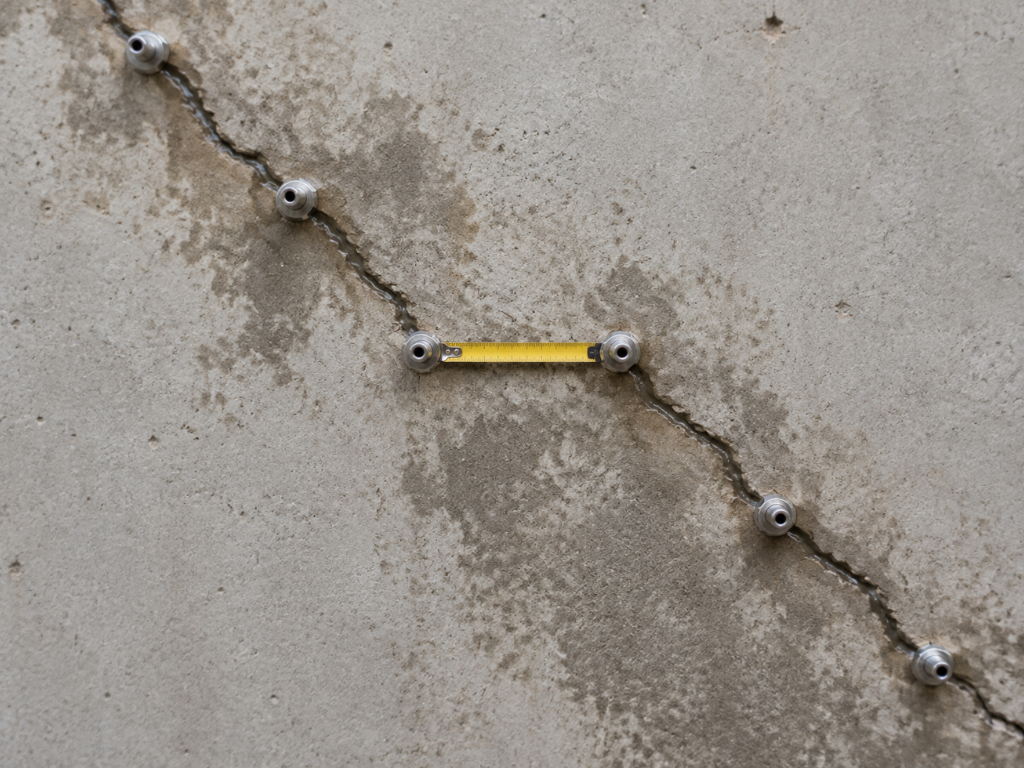
PU injection grouting costs about $40 to $150 per injection point, the range Proseal publishes across its cost guides. Contractors space points 150 mm to 300 mm apart along a crack, so a one-metre crack takes four to seven points before anything else goes on the bill.
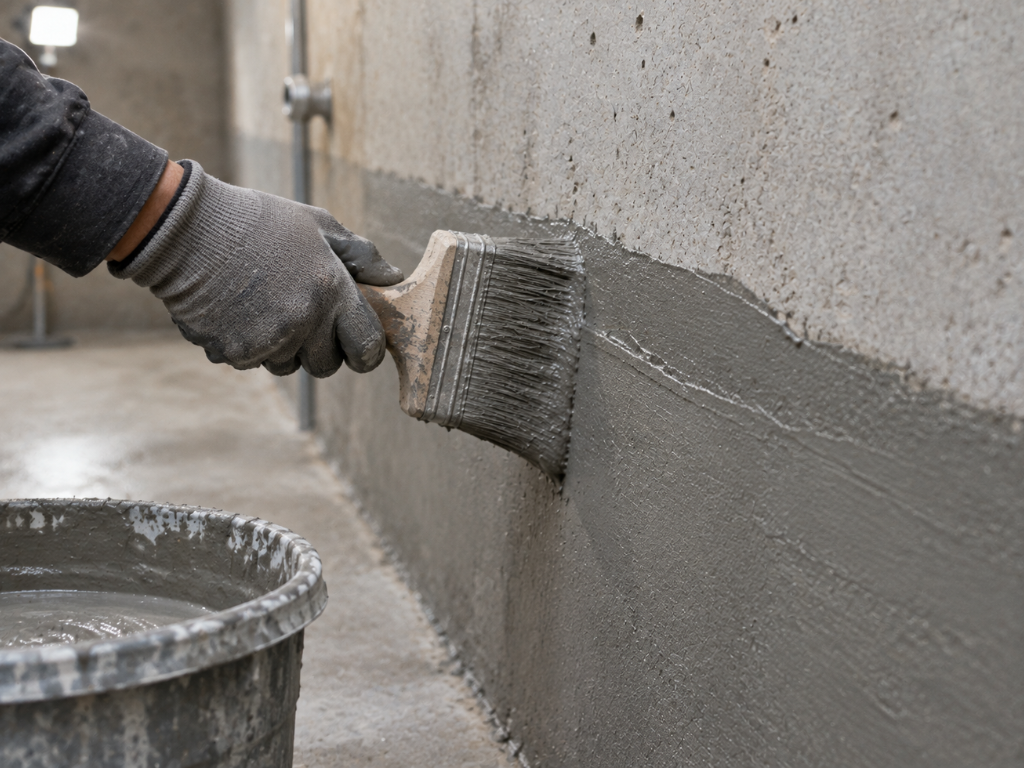
Area-based membrane work on wet areas costs around $15 to $35 per square foot for an overlay application. That range comes from bathroom and toilet jobs, and you can’t apply it straight to a wall or an external elevation, for the access reasons covered further down.
Why do three quotes for the same defect use different units?
Each method gets sold in the unit that tracks its main cost. Injection cost rises with the number of entry points, and wall area barely affects it. Membrane cost rises with area, whatever the length of the defect. Nobody is hiding anything.
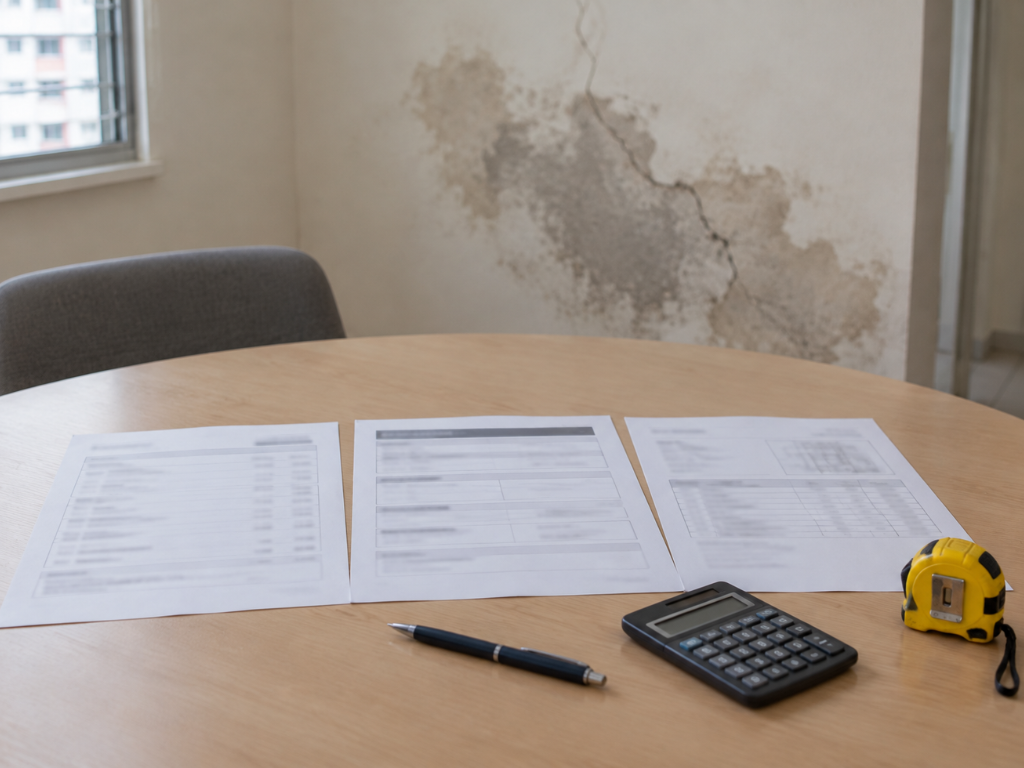
The trouble starts when you line the quotes up. Say your wall is seeping and you receive one quote at $110 per injection point for 12 points, another at $28 per square foot across 45 square feet, and a lump sum for hacking and rebuilding. You’re looking at three measurement systems for one wall, and the totals alone can’t tell you which offers better value.
The unit can also show you whether the contractor diagnosed the defect at all. A crack that weeps under pressure calls for injection, so a contractor who prices it by area measured the wall and missed the fault. A wall with general permeability calls for a membrane, so a contractor who prices it per point plans to drill holes into a problem with no single entry point.
Contractors don’t choose between injection and membrane methods on commercial grounds. Each suits a different defect, and the unit on your quote is the first sign of whether the contractor knows which one you have.
What drives the cost of PU injection per point?
Point count, depth and access, in that order. The rate per point varies far less than the number of points, which is why two injection quotes at the same rate can differ threefold.
Crack length and spacing set the point count. Contractors space points closer on a narrow crack and further apart on an open one. They tighten the spacing again on a thick wall, because the resin has further to travel. If a contractor gives you a point count without measuring the crack, they’ve guessed.
Depth matters because the packer has to reach the middle of the element. For the same metre of crack, a 100 mm slab and a 250 mm retaining wall need different packers, drilling time and resin volumes.
Access affects injection the same way it affects every other job in this trade. Injecting a crack inside a bedroom needs a ladder. Injecting an external elevation on the eleventh floor needs a rope access team mobilised before anyone drills a hole.
Ask for the point count and spacing on the quote, not only the total. If two contractors both charge $90 per point but one specifies 10 points and the other 26, they disagree about the defect. A properly scoped injection grouting service starts from the crack, and the size of the room shouldn’t come into it.
What drives the cost of cementitious membrane work?
Surface preparation, number of coats and coverage rate, and a per-area headline shows you none of them. Material makes up the smaller share of the price. Most of your money goes on the labour to get the substrate ready.
Preparation ranges from a wash and prime on sound render to full mechanical grinding when an old coating has to come off. That range alone can shift the real per-area cost a long way, and a low quote often leaves the preparation line out.
The coat count and dry film thickness set how much material the job uses. A two-coat system at 1.5 mm uses a lot more than a single coat at 1.0 mm, yet a quote can describe both as “cementitious waterproofing applied” without naming either.
The coverage rate ties those two together. Manufacturers publish consumption per square metre per coat. If your quote names the product, coat count and thickness, you can check it against the manufacturer’s figure. If it names none of them, you can’t check anything.
Is hacking or non-hacking cheaper for seepage repair?
Non-hacking costs less on the day, though it won’t always cost less over the years you own the property. Injection and surface treatment skip demolition, disposal and reinstatement, and those make up most of a hacking bill.
Proseal’s published wet-area comparison shows the gap. Overlay work costs $15 to $35 per square foot, while hacking and waterproofing without re-tiling costs $45 to $80. That’s about three times the price before anyone reinstates the finishes.
The same ratio holds for seepage work, but it shouldn’t decide the method for you. Injection seals a single path through an element. It won’t correct falls, replace a failed membrane across an area or fix a saturated screed. If one of those is your real defect, injection is cheap and doesn’t work, and you’ll pay again for the proper repair.
Let the defect choose the method, then compare prices within that method. An injection quote and a hacking quote answer different questions, and the cheaper one only wins if it answers the right question.
Why does the same repair cost more on an external wall?
Access. The repair stays close to identical and the cost of reaching it changes a lot. On external seepage work, access is the biggest single cost variable, and it often costs more than the treatment.
Scaffolding costs you erection, weekly hire and dismantling, so the total grows with the length of the job. Rope access costs a mobilisation fee plus a day rate, so it grows with the days the team spends on the ropes. A building with a working gondola adds almost nothing for access. A competent contractor prices the point where one option overtakes another, and you can fairly ask for both scaffold and rope access prices when either would work.
That access line also carries real risk. MOM’s WSH Report 2025 records that small-scale construction works accounted for over 60% of fatal and major injuries in the construction sector, with small-scale meaning addition and alteration works and renovations. If a high-rise quote prices external access below the treatment itself, the contractor has left something out.
Buildings over 13 metres and more than 20 years old also fall under BCA’s Periodic Facade Inspection regime, which requires a Competent Person to inspect them every seven years. Where that cycle is running, building owners often scope external wall seepage work into it instead of commissioning a separate job, which changes the timing and who signs off.
Does property type change the price?
Yes, and again access explains most of the difference. HDB flats, condos and landed homes differ in how easily a contractor can reach and stage the work. The membrane costs the same in all three.
HDB jobs tend to be the easiest to price. Internal wet areas and walls need no special access, lift use is predictable, and disposal routes are already set.
Condo jobs cost more than the same scope in an HDB flat. Contractors deal with load-in restrictions, common area protection, deposits and limited working hours. External elevations raise the facade access question, and in a strata development the management corporation commissions the work, not you as an individual owner.
Landed homes show the widest spread. A ground floor internal wall is a simple job. A basement wall under hydrostatic pressure or a three-storey external elevation takes far more work, and one house can have both.
Who commissions the job changes how you buy it as much as what you pay. You can hire a contractor for your own repair directly. An MCST runs a different process and usually needs a measured scope before it can put a motion to a meeting.
How do you compare quotes that use different units?
Work out the cost per year of warranted service life. Divide each quoted total by the warranty years on offer, and three quotes in three units become three annual figures you can compare.
Keep the sum simple, since you only need a rough comparison. A $1,200 injection job with a 3-year warranty costs $400 a year. A $3,000 membrane job with a 7-year warranty costs about $430 a year. Those figures sit close together, so your real decision is which method suits the defect. A $900 job with a 1-year warranty costs $900 a year, which puts it in a different league however good the headline price looks.
Two conditions keep the comparison fair. Use the workmanship warranty and ignore the manufacturer’s material warranty, because workmanship is what fails. And make sure every quote covers the same defect, which is why you settle the method question first.
Khoo Sze Boon, Managing Director for Singapore at Turner & Townsend, writing in August 2025, said buyers need “a balance between competitive tendering and realistic budgeting”. Turner & Townsend recorded headline tender price movement of 1% in 2024 and 3% in 2025, with 5% forecast by 2026, so your neighbour’s 2024 invoice won’t work as a benchmark. When you know the full scope of waterproofing services a complete job covers, you avoid comparing two quotes for different scopes.
What does a longer warranty actually cost?
Less than the difference it makes to your cost per year. A longer warranty usually adds cost to the specification, and the labour stays about the same, because a better system earns the longer term.
Contractors extend the term by upgrading the specification. A higher-grade membrane, an extra coat, a thicker dry film or a manufacturer-certified applicator each add material cost and each give the contractor grounds to stand behind the work for longer. Those upgrades add small amounts to the smaller share of the quote.
Run the annual figure and the choice gets easier. If you pay 20% more for double the warranty, your cost per year drops by 40%. On most seepage quotes, no other change saves you as much, and owners cut the warranty line first.
A warranty only holds its value under two conditions. It must state the workmanship term separately from the material term. And the firm must still be around to honour it. BCA registration under workhead CR13 gives you some assurance on that, because it requires financial standing, declared technical staff and a record of completed projects.
Check how long the firm has traded. A company incorporated eighteen months ago that offers five years is promising cover for a longer period than it has been in business.
Price the defect, then compare the quotes
The unit on your quote tells you more than the total. Injection is priced per point because its cost follows entry points, and membranes are priced per area because their cost follows the surface. A contractor who uses the wrong unit measured your room and missed the fault. Divide each total by its warranty years to put all the quotes on one scale, and you’ll often find the cheapest quote comes with the shortest cover.
Send a photo, your property type and your floor level through the contact form, or call 8688 8600. Proseal diagnoses the defect before quoting a method, and lists access and warranty as separate items.
FAQs About Water Seepage Repair Cost Singapore
What should an itemised water seepage quote contain?
Six lines: surface preparation with the method named, the product brand, coat count and dry film thickness (or point count and spacing), access as its own figure, disposal, and the warranty split into workmanship and material terms. You can’t compare a quote that leaves out the access line or the warranty split.
Why is my quote higher than my neighbour’s for the same block?
Access and scope, in most cases. An external elevation needs rope access or a gondola, while an internal wall needs neither, and two contractors often scope different areas of the same defect. Ask both for the measured quantity and the access cost separately before you compare totals.
Are water seepage repair prices rising in Singapore in 2026?
Yes. Turner & Townsend recorded Singapore’s headline tender price movement at 1% in 2024 and 3% in 2025, and forecasts 5% by 2026, driven by labour shortages and selective bidding. If you judge a new quote against a 2024 invoice, it will look high when it isn’t.
Is PU injection always cheaper than hacking?
On the day, yes. Injection skips demolition, disposal and reinstatement, which make up most of a hacking bill. It only gives you value when the defect is a single crack or joint. On a failed membrane or a saturated screed, you pay less and the leak continues.
Do I need a BCA-registered contractor for seepage repair?
Private residential work doesn’t legally require one, but CR13, Waterproofing Installation, is the BCA workhead that identifies a waterproofing specialist. Registration also reflects financial standing and track record, and you need both from a firm if you plan to claim on a multi-year warranty later.
I am raw html block.
Click edit button to change this html

Sorry, the comment form is closed at this time.