





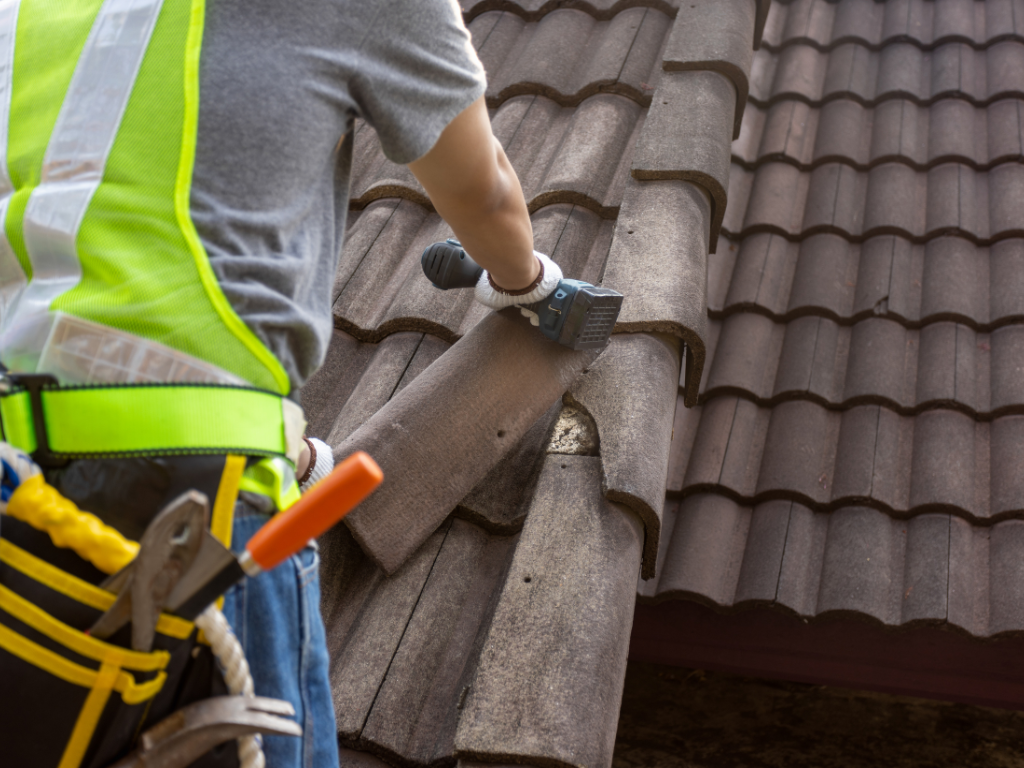
16 Aug Repair or Replace Roof: 5 Rules for Singapore Owners
Deciding whether to repair or replace a roof in Singapore comes down to two numbers: how old the waterproofing is, and how fast the leaks are coming back. NEA records daily maximum UV Index readings averaging 6 to 9 year round, which ages membranes faster than any datasheet assumes. Five rules settle the question before a contractor is in the room, and each one connects back to when a leaking roof needs work.
Proseal Contracts Pte Ltd has repaired and replaced roof waterproofing across Singapore since 1999, BCA-registered under workhead CR13, Waterproofing Installation.
The five rules
| Rule | The test | Result if it fails |
|---|---|---|
| Calendar | Is the system past its service life band? | Replace |
| Interval | Is the gap between recurrences shrinking? | Replace |
| Count | Three repairs on the same roof inside 24 months? | Replace |
| Substrate | Is the screed or slab saturated or delaminated? | Fix substrate first, then replace |
| Spread | Are failures appearing in new places, not the same place? | Replace |
One rule failing is a strong signal. Two failing settles it.
When does repairing a roof stop making sense?
Repair stops making sense the moment the membrane itself is what failed, instead of a detail sitting on it. A parapet termination, a rainwater outlet collar or a single split is a detail failure, and detail failures are worth repairing at any age. A membrane that has lost flexibility across its whole area has failed globally, and patching one spot on a globally failed membrane buys you months.
The distinction is testable. Detail failures come back in the same location. Global failures come back in new ones, which is the spread rule. An owner who has fixed a parapet, then a drain collar, then an open field crack in the middle of the roof has not had three separate problems. They have watched one membrane run out.
Each repair looked reasonable at the time, which is how this catches people. Nobody decides to spend replacement money in three instalments. It happens by default, one call-out at a time, because no one applied a rule at repair number two. Set the rules before the next leak, while you are not standing under a wet ceiling.
How long should roof waterproofing actually last in Singapore?
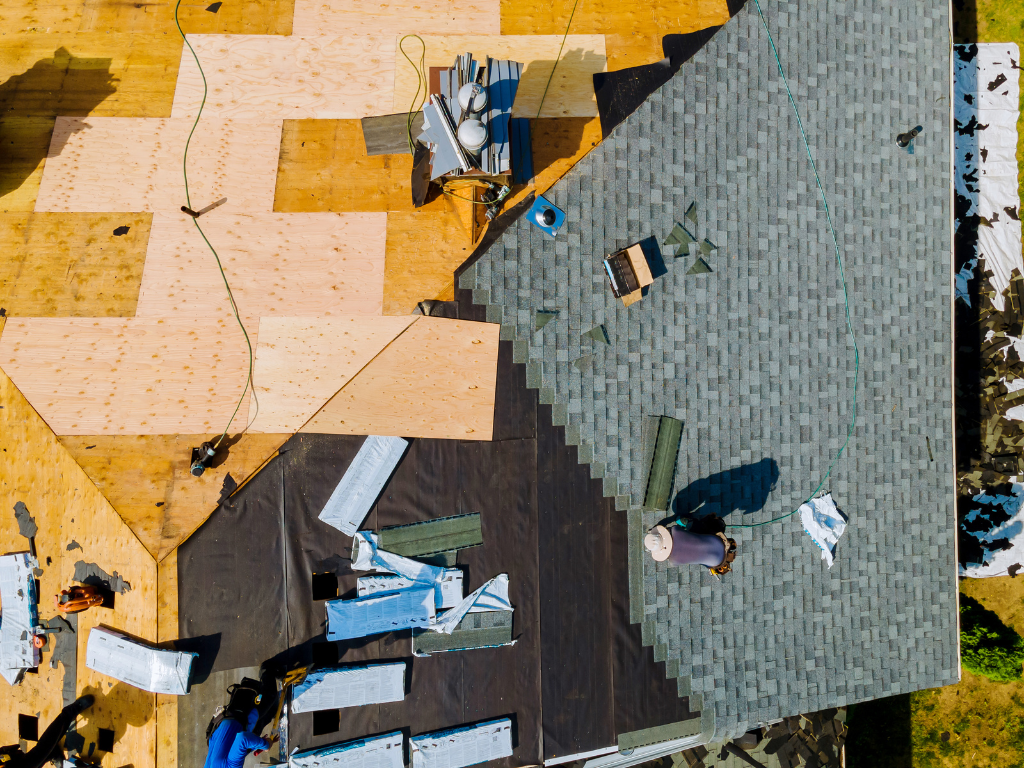
Working service life in Singapore runs 7 to 10 years for tile roof systems, 8 to 12 years for metal roof systems, and 10 to 15 years for RC flat roof membranes. Those bands are shorter than most manufacturer datasheets state, and the gap is climate, not quality.
Service life depends on the system, the substrate and the exposure. A torch-on SBS membrane under a protective screed on an RC flat roof sits at the top of its band, because the screed shields it from UV. The same membrane exposed on a roof deck sits at the bottom. Reflective coatings and mineral-surfaced cap sheets buy extra years. Bare bitumen in full sun does not.
Understanding how membranes are built explains why exposure matters so much. A membrane is a polymer matrix carrying a reinforcement, and it is the polymer that degrades while the reinforcement stays intact. The sheet looks whole long after it stopped behaving like a membrane.
The system chosen at installation sets the band you are working inside a decade later. Comparing waterproofing systems at replacement time matters more than it did at first install, because by then you know how the roof actually performs.
Why does a patch on an old membrane fail at the patch edge?
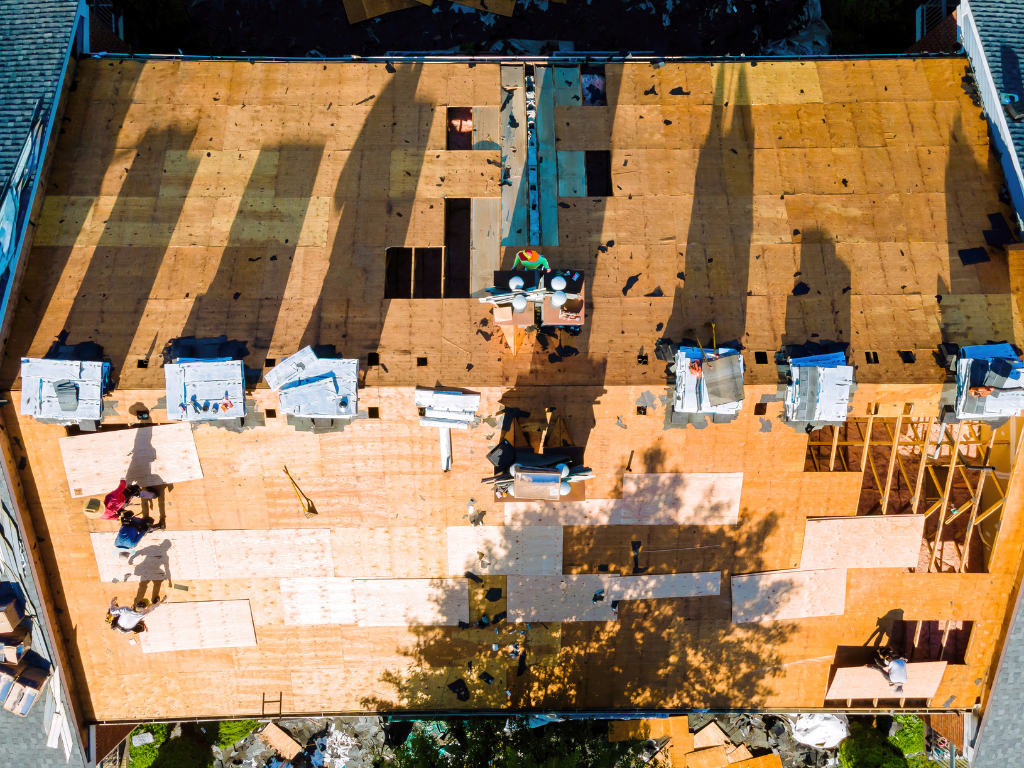
Because the failure moves to the weakest material at the joint, and on an old roof that is the existing membrane. Garrido and colleagues, publishing in Construction and Building Materials in 2018, found that peel failure at lap joints between new and aged SBS membranes predominantly occurred on the aged membrane side.
That one finding explains the most common complaint in roof repair: the patch held, and the leak reappeared 500 mm away. The new material bonded correctly. The aged membrane next to it tore. A stiff new patch on an embrittled sheet also concentrates thermal stress at the patch perimeter, so the perimeter is where the next split forms.
Ageing is measurable. Zhang and colleagues, writing in Polymers in January 2026, recorded cracking temperature after 28 days of accelerated thermal-oxidative ageing. A root-resistant bituminous membrane shifted from −35 °C to −28 °C. An ultra-thin reinforced self-adhesive membrane shifted from −28 °C to −18 °C. Their conclusion for practitioners is direct: “material selection should be tailored to the aging condition of existing membranes.”
So match the repair system to the age of the roof instead of defaulting to whatever is on the van. The differences between torch-on and PU systems matter most on an aged substrate, where compatibility decides whether the repair lasts two years or six.
Does Singapore’s climate shorten roof service life?
Yes, and UV is the main reason. NEA records that Singapore experiences high UV radiation year round, with daily maximum UV Index readings averaging 6 to 9 because the country sits close to the equator. Dr Abel Yang, a physics lecturer at the National University of Singapore, put the cause simply: “We receive more direct sunlight which passes through less atmosphere.”
The UV Index is a linear scale, so a reading of 8 carries twice the sunburn-weighted intensity of a reading of 4. A membrane in Singapore absorbs that load every month of the year, with no winter to interrupt it. Temperate markets get a real seasonal pause, which is why a European datasheet figure does not transfer.
Thermal movement is the second driver, and it is getting worse. The Meteorological Service Singapore reported that 2025 delivered the warmest June and warmest November on record, with annual mean temperature rising 0.24 °C every decade since 1984. A dark membrane on an exposed RC deck cycles through a wide daily temperature swing, expanding and contracting against a substrate that barely moves. Flexibility absorbs that cycling. An aged membrane has less of it, which is precisely what the cracking temperature data measures.
How many repeat repairs is too many?
Three on the same roof inside 24 months. At that point the money already spent has bought a pattern, not a fix, and the fourth call-out will not break it either.
The interval matters more than the count. Two repairs eight years apart is normal maintenance on a 12-year-old RC flat roof. Two repairs eight months apart on the same roof is a system telling you it has finished. Once the gap between recurrences starts halving, the membrane has passed the point where localised work holds, and no repair specification changes that.
Owners rarely have this data, because nobody writes it down. Keep one line per event: the date, the location, what was done, and who did it. Four lines on a page settle the repair or replace question faster than any inspection, and any contractor quoting replacement should be asked to justify it against that log.
One exception is worth flagging. A roof still inside its service life band that has failed three times in 24 months usually has an installation defect, not an ageing problem. The rule still says stop patching. The reason is different, and so is the conversation with whoever installed it.
What is the difference between membrane failure and substrate failure?
Membrane failure means the waterproofing has degraded while the concrete and screed beneath it are sound. Substrate failure means water has been sitting in the screed or slab long enough to saturate it, delaminate it, or start corroding reinforcement. The first is a replacement job. The second is a replacement job that cannot start yet.
No membrane bonds to a wet substrate. Torch-on systems need a dry, sound surface, and self-adhesive systems need it more. Laying new waterproofing over saturated screed traps the water underneath, where it blisters the new membrane from below within one dry season. Any contractor who quotes replacement without a moisture reading on the substrate has quoted a job that will fail.
Saturation also has a structural consequence owners underestimate. Water reaching reinforcement carries chlorides and starts corrosion, and corroding steel expands and spalls the concrete cover. Once that begins, the roof needs concrete repair works before any waterproofing goes back on, and the sequence is not negotiable.
The test is straightforward: moisture readings across a grid, then a small opening at the wettest point to see what is under the finish. Two hours of work decides whether you are buying one trade or two.
Does the roof type change the repair or replace answer?
Yes, because the three types fail in different places and carry different service life bands.
| Roof type | Service life band | Typical failure mode | Repair viable when |
|---|---|---|---|
| Tile | 7 to 10 years | Bedding loss at ridge and hip, slipped tiles | Failures stay at ridges and hips |
| Metal | 8 to 12 years | Side and end laps, fastener washers, valley junctions | Fewer than roughly a fifth of fasteners have failed |
| RC flat | 10 to 15 years | Parapet upstands, outlet collars, then open field | Failures stay at details and off the field |
Tile roofs stay repairable longest, because their failures are usually mechanical instead of material. A slipped tile is a slipped tile at year 3 or year 20. Once bedding mortar has carbonated across the whole ridge line the job becomes a restoration, and tile roof restoration options start with a fixing audit before anyone specifies a coating.
Metal roofs cross the line on fastener count. Replacing 20 washers on a 2,000 square metre roof is maintenance. Replacing 400 is a re-fix job, and at that point overlaying the sheet is usually the better spend. RC flat roofs cross the line when failures leave the details and turn up in the open field, which is the spread rule applied to one roof type. A single crack in the open field of an RC roof at year 13 carries more diagnostic weight than five separate parapet repairs at year 6.
How do you work out total cost of ownership without knowing the price?
Compare repair frequency against remaining service life. The arithmetic works without a single dollar figure. If the expected interval between repairs is shorter than one third of the remaining service life, replacement wins on total cost of ownership whatever either option costs.
Run it on a real case. An RC flat roof at year 12 of a 10 to 15 year band has roughly 3 years of expected life left. Repairs are now recurring every 8 months. Three years of that is four or five more call-outs, each with its own access mobilisation, before replacement happens anyway. Access is the fixed cost that repeats, which is why frequent small repairs on a high-rise cost more in total than one replacement even when each individual repair looks cheap.
Consequential cost is the part owners forget. Every leak cycle wets ceilings, damages finishes, and on a strata development generates correspondence with the unit below. Those costs sit outside the roofing quote and land on the owner anyway.
Ask any contractor for one figure: the expected interval their repair buys, in months. A contractor who will not commit to a number is telling you something.
Can you replace a roof membrane too early?
Yes, and it happens more often than the industry admits. Three situations where replacement is the wrong call.
Start with the roof still inside its service life band that is leaking only at details. A 6-year-old RC flat roof leaking at two outlet collars needs two collars redone, not 800 square metres of membrane. Detail failures at that age point at installation workmanship, and if the warranty is live the right move is a defect claim against the original contractor.
Then there is the substrate nobody assessed. Laying new membrane over saturated screed converts a membrane problem into a membrane problem plus a wasted replacement. Assess first, always.
The third is the leak that was never properly diagnosed. Replacing an entire roof because water appears at a ceiling, without establishing that the roof is the entry point, is the most expensive way to discover it was a concealed pipe or a facade junction. Roofs get replaced for leaks they did not cause more often than owners ever find out, because the replacement coincidentally disturbs the real path.
A contractor who talks you out of a replacement on any of those grounds has told you something useful about how they will behave on the job you eventually give them.
The question underneath all five rules
Repair or replace answers one thing: does the membrane still behave like a membrane? The five rules settle that in an afternoon with no contractor in the room. Owners who overspend are the ones who never applied a rule, and paid for a replacement in instalments without ever getting one.
Send your roof type, the year the waterproofing was last done, and the dates of the last three leaks through the contact form, or call 8688 8600. A Proseal supervisor will run the five rules against your roof before anyone proposes work.
FAQs about repairing or replacing a roof in Singapore
Can you waterproof over an existing membrane instead of stripping it?
Yes, where the existing membrane is sound, dry and compatible with the overlay system. Zhang and colleagues, writing in Polymers in January 2026, showed that bonding performance between new and aged membranes degrades with the age of the substrate, so compatibility testing decides it. Overlaying saturated or delaminated material fails within one dry season.
How do I know if my roof is past its service life if nobody kept records?
Three sources usually settle it: the building’s TOP or completion year, the last renovation records held by the MCST or Town Council, and the membrane itself. A cap sheet that has lost its mineral surfacing and gone matt has typically passed 8 years of Singapore exposure.
Does a recoating count as a replacement?
No. A liquid-applied recoating adds a new wearing surface over an existing system and extends service life by a few years. A replacement removes the failed membrane and installs a new system against SS 637:2018. Recoating a membrane already past its band postpones the decision instead of resolving it.
Is replacing a roof membrane disruptive for occupants?
Less than owners expect on an RC flat roof, where the work happens above the occupied space and access runs externally. Torch-on systems involve open flame and a hot works permit. The programme runs longer during the Northeast Monsoon from late November to March, when dry working windows are shorter.
Does replacing the membrane fix a ponding problem?
No. Ponding is a falls problem, not a membrane problem, and a new membrane laid to the same falls ponds identically. Correcting it means re-screeding to falls or adding outlets, priced separately. Any RC flat roof replacement quotation should state which of the two it includes.

Sorry, the comment form is closed at this time.