





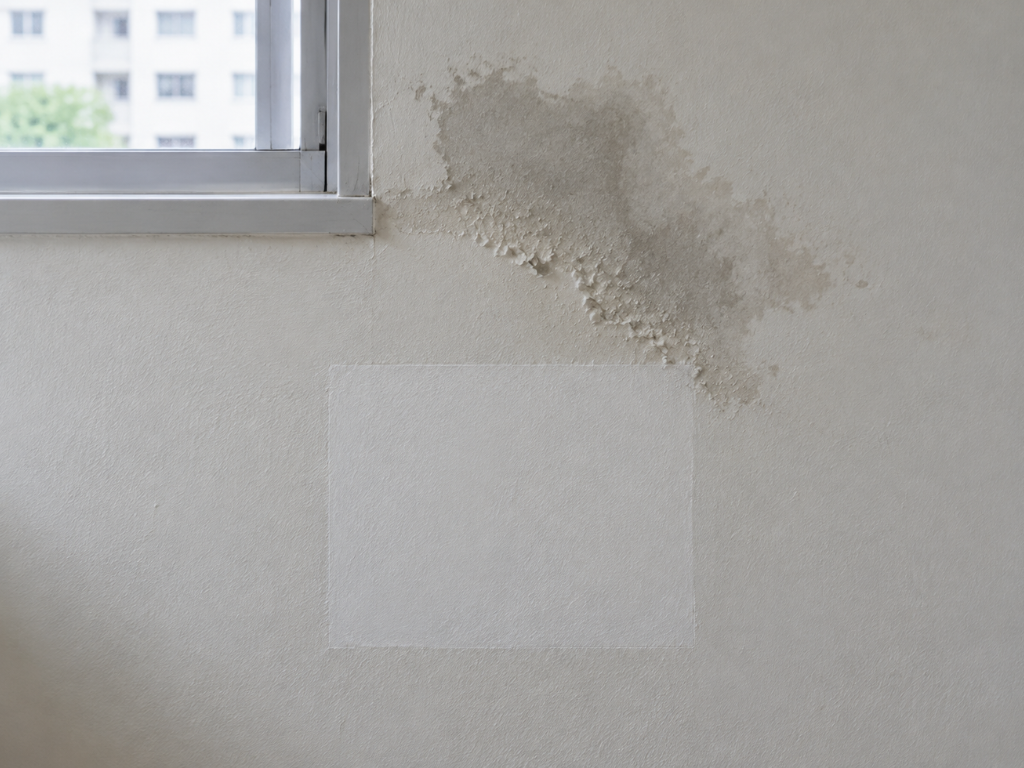
05 Nov Damp Patches on Wall Keep Coming Back? 6 Reasons
When damp patches keep coming back after a repair, the contractor almost always treated the stain and missed the path the water takes. Singapore’s climate makes it worse. NEA records daily maximum UV Index readings averaging 6 to 9 all year, and the wet-dry cycle after every squall reopens any repair built on the wrong specification. Work out which of the six failures below hit your wall before you commit to another waterproofing and concrete repair scope.
Why do damp patches come back after a repair?
Either the repair treated the spot where water showed up instead of where it got in, or the contractor bonded it to something that was already failing. Those two explain most returns, and the timing tells you which one you’re dealing with.
| When it returned | Most likely reason |
| Within weeks, never really stopped | The source was never found |
| After the first dry spell, then the next rain | Wrong resin for a wet-dry crack |
| Within 12 to 18 months, patch edge lifting | Surface preparation or bond failure |
| Gradually, with rust staining | Carbonation and reinforcement corrosion |
| Around the warranty expiry | Service life, not a defect |
Poor workmanship, in the usual sense of the phrase, doesn’t explain any of these. Four of the five came from specification decisions made before anyone picked up a tool. So when you talk to the next contractor, ask about materials before you ask about experience.
The difference affects your money as well as the wall. A workmanship failure gives you a warranty claim against the firm that did the job. A specification failure often falls outside the warranty, because the system did what that system does and someone picked the wrong one. If you go straight to a claim without knowing which you have, you can lose the first month arguing the wrong point.
Reason 1: the source was never found
Most failed repairs sit over the exit point, while the entry point stays open. Water that gets into a wall travels inside the build-up and comes out at the first route it finds, often some distance from where it entered.
A contractor who turned up, looked at the stain and quoted has priced the visible area. None of that finds the path. The treatment covers wall the water never passed through, and the real entry point stays open.
You’ll recognise this one because the repair never fully worked. The damp may shrink or move instead of stopping, because sealing one part of a wet area pushes the moisture elsewhere.
Contractors skip working out how moisture enters walls when an owner wants a fast quote. Check the original job: did anyone take a moisture reading or run a water test, or did the contractor set the scope from a photo?
Reason 2: surface preparation was skipped
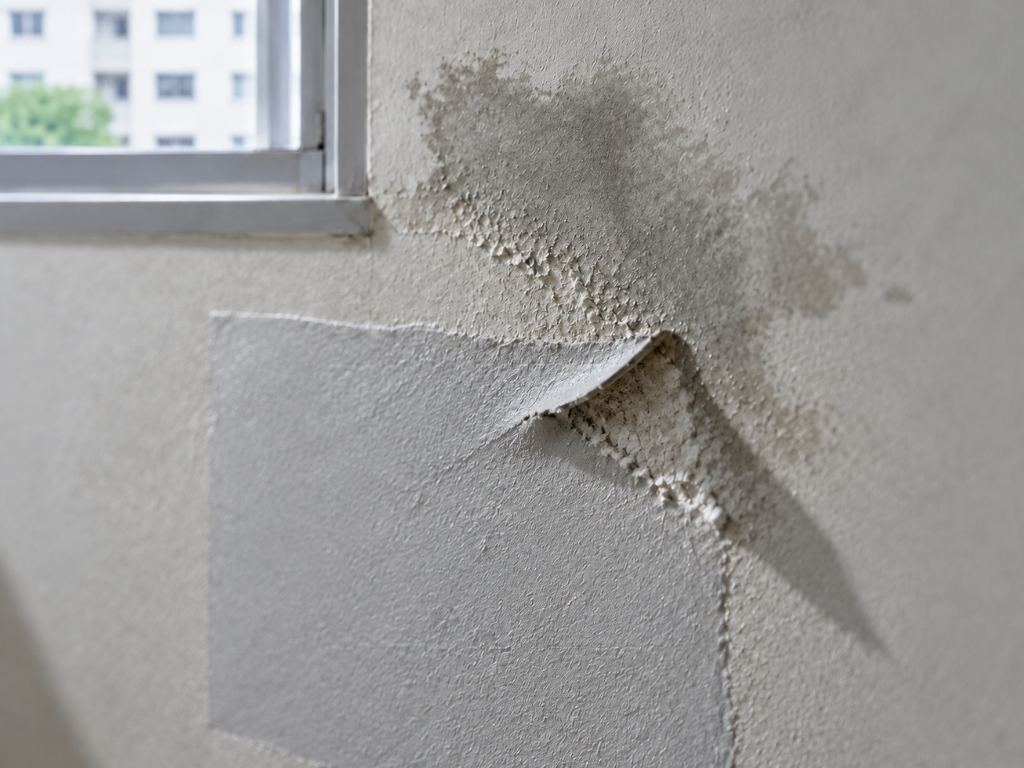
A membrane holds only as well as its bond, and the bond gets made during preparation. Once the job is finished, you can’t see the preparation, and it’s the first line a contractor cuts to bring a price down.
Three substrate conditions break a bond. Laitance, the weak cement-rich layer on a concrete surface, has to come off mechanically, or the membrane sticks to a layer that is loose itself. Any existing coating has to be removed or proven compatible. And on a damp substrate, most systems can’t cure properly at all.
You’ll see the patch lift at its edges within 12 to 18 months while the material itself still looks sound. The membrane held up, and its grip on the wall gave way.
Ask which preparation method the original contractor used. Acid etching, mechanical grinding and shot blasting each leave a different surface profile. If the quote named none of them, the contractor almost certainly didn’t price any of them.
Reason 3: the wrong PU resin was injected
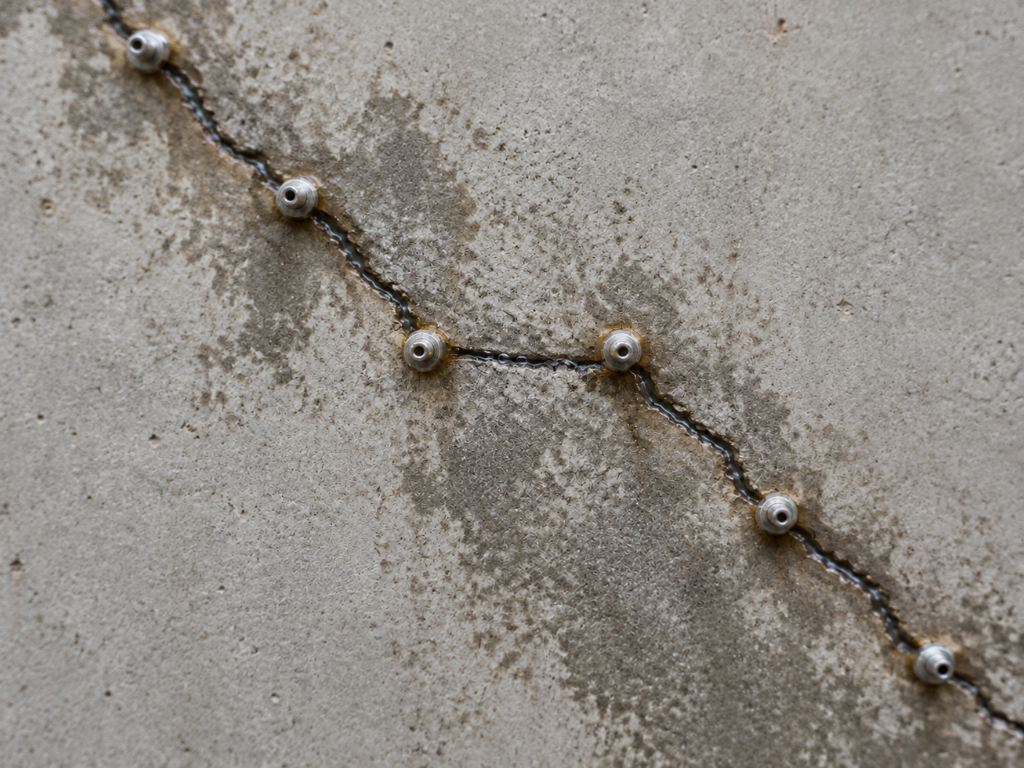
Injection resins come in two chemistries. The right choice depends on whether the crack stays wet or dries out, and the contractor’s habits shouldn’t decide it. A wrong pick is the most common reason an injection repair reopens.
Hydrophilic resin soaks water into its structure and swells, so it grips wet concrete well and gets into fine cracks. Resin manufacturers’ technical guidance flags the catch: the cured material holds water, so it can shrink when the crack dries. The seal contracts, the path opens up again, and the damp returns with the next rain.
Hydrophobic resin reacts with only the water it needs and cures into a closed-cell foam that stays the same through wet and dry spells. It bonds less readily to wet concrete and sets stiffer, so it copes less well with a crack that moves.
That gives you a simple rule. A crack that stays wet, as in a basement or retaining wall, suits hydrophilic resin. A crack that swings between wet and dry, as most Singapore external walls do between squalls and dry spells, suits hydrophobic. The differences between resin and membrane systems decide the result more than injection technique does.
You can spot this one easily. The repair held through the wet weeks, stayed quiet through a dry spell, and leaked again with the next heavy rain.
Reason 4: the new membrane bonded to a failing one
A repair takes on the condition of whatever it sticks to. When a contractor lays a new membrane over an old one, the whole assembly is only as strong as the older layer.
Garrido and colleagues, writing in Construction and Building Materials in 2018, tested lap joints between new and aged bituminous membranes. When the joints peeled apart, the failure mostly happened on the aged membrane side, and the new material stayed intact. Your new layer can hold while the old one tears away underneath it.
Zhang and colleagues, writing in Polymers in January 2026, measured how far that degradation goes. After 28 days of accelerated ageing, one bituminous system’s cracking temperature shifted from −35 °C to −28 °C. They concluded that “material selection should be tailored to the aging condition of existing membranes”.
In practice, if a contractor overlays an aged system without checking its condition, they’re bonding your new work to material nobody has assessed. A membrane is a polymer matrix carrying a reinforcement, and that explains why the sheet can look intact long after it has stopped performing.
Reason 5: the reinforcement kept corroding underneath
Sealing the surface won’t stop corrosion that has already started inside the concrete. Once water reaches the reinforcement, the repair fails from behind, and the edges have nothing to do with it.
Concrete protects steel because it’s highly alkaline. Over the years, carbon dioxide in the air reacts with the concrete in a process called carbonation, which lowers that alkalinity and strips away the protection. When the reinforcement starts to corrode, the rust takes up more space than the original steel and pushes the cover concrete off from the inside.
A waterproofing layer on top does nothing to halt it. The steel keeps expanding, the cover cracks again, and the new path ends up wider than the one the contractor sealed.
Look for rust-coloured staining, flaking, or a patch that bulges outward instead of lifting. If you see any of those, waterproofing alone won’t fix the wall. A spalling and rebar repair has to expose the steel, treat it and rebuild the cover before any coating goes back on. Do it the other way round and you pay for both jobs twice.
Reason 6: the warranty outlasted the system
If a repair stops working around the time its warranty runs out, it hasn’t necessarily failed. It may have reached the end of its service life, and the warranty term and service life were never the same number.
Singapore cuts service life short compared with the figures on a European datasheet. Coatings and exposed systems face a daily maximum UV Index averaging 6 to 9 all year, with no seasonal break, and thermal movement keeps increasing. The Meteorological Service Singapore recorded the warmest June and warmest November on record in 2025, with annual mean temperature rising 0.24 °C per decade since 1984. A system needs flexibility to absorb that heating and cooling, and flexibility is the first property to go.
The warranty offer itself can work against you. A five-year warranty on a system that realistically lasts five years in Singapore leaves the contractor no margin. If you claim in year four, the contractor has every reason to dispute it.
Ask for two numbers separately: the warranty term, and the manufacturer’s stated service life for that system in Singapore’s exposure. A contractor who offers a warranty shorter than the service life is confident in the system. A warranty that matches the service life to the year is a sales figure.
How do you tell which reason applies to your wall?
Three observations narrow it to one or two reasons: when the damp came back, where it came back compared with the patch, and what else appeared with it.
Timing tells you the most. If the damp returned within weeks, the contractor missed the source, because no material degrades that fast. If it came back after the first dry spell and then heavy rain, suspect resin shrinkage in an injected crack. If it returned at 12 to 18 months with the patch edge lifting, look at bond failure from poor preparation.
Location sorts out the rest. Damp inside the treated area suggests the treatment itself failed. Damp just outside it suggests the water found the next route out, which usually means the source further up the path is still untreated.
Then check what came with the damp. Rust staining, flaking or a bulge points to the reinforcement, and you’ll need a different trade, not just a different specification. Clean damp with no staining keeps it a waterproofing question.
Two reasons often work together. A missed source combined with hydrophilic resin in a crack that wets and dries gives you a repair that never quite worked and then failed outright. Fix only one of them and you’ll get another partial result.
What should you ask the next contractor?
Six questions, one for each reason above. Pay more attention to the answers than to the price.
How did you locate the source, and what reading or test backs that up? Which preparation method will you use, and why that one? If you’re injecting, is the resin hydrophilic or hydrophobic, and does this crack stay wet or cycle between wet and dry? What condition is the existing system in, and how did you check it? Is the reinforcement corroding, and if so, what happens before the waterproofing? And what service life does the manufacturer give this system, separate from your warranty term?
Watch how a contractor answers the resin question. If you get a product name instead of a chemistry, they haven’t made the decision you asked about. Resin selection starts with whether the crack stays wet or cycles, and a firm that can’t tell you hasn’t checked.
Registration is your last filter. BCA lists waterproofing installation under workhead CR13, and a firm registered there has met financial, staffing and track record requirements. You need all three if you ever have to claim on a multi-year warranty in year four.
Find out why it failed before you pay again
Returning damp comes from specification failures far more often than from poor workmanship. The contractor matched the resin to the wrong wetting pattern, bonded the membrane to material that was already breaking down, or sealed over reinforcement that kept expanding. The timing points you to the cause, and a repair that reopens after one dry season needs a different fix from one that never worked.
Send a photo of the patch, the date of the last repair and what the contractor did through the contact form, or call 8688 8600. Proseal works out why the last repair failed before proposing another.
FAQs About Damp Patches On Wall Come Back
Can I claim under the warranty if the damp came back?
Yes, if the failure falls within the workmanship warranty term and a defect caused it, not the end of the system’s service life. Ask for the warranty document showing the term, the exclusions and the contractor’s UEN. Most disputes come down to whether the return was a defect or normal ageing.
How long should a wall waterproofing repair actually last?
Ask for the manufacturer’s stated service life for that system in external exposure, separate from the warranty term. Expect less than temperate-climate figures, because NEA records a daily maximum UV Index averaging 6 to 9 all year in Singapore, with no seasonal break.
Should I use the same contractor again if the repair failed?
Only if they can tell you which of the six mechanisms failed and what they’ll change. A firm that offers to reapply the same specification will get you the same result. A firm that points to the resin choice or the substrate condition as the error has diagnosed the problem.
Is hydrophilic or hydrophobic resin better for a Singapore external wall?
Hydrophobic, in most cases. External walls swing between squall wetting and dry spells, and hydrophilic resin can shrink as a crack dries, reopening the path when the next rain comes. Hydrophilic resin suits walls that stay wet, such as basements and retaining walls.
Does painting over a damp patch ever work?
No. Paint on a damp substrate fails within months, and anti-damp coatings slow the symptom without touching the source. Fix the way water gets in, let the wall dry to a stable moisture reading, then repaint. If damp shows through fresh paint, the source is still active.

Sorry, the comment form is closed at this time.